How Global Market Research Firms Handle Multilingual Surveys and Cross-Border Insights

Updated April 7, 2026

Article Skim Time: 8 minutes

Updated April 7, 2026
Article Skim Time: 8 minutes
Every market research firm understands the fundamentals of good data: representative samples, valid instruments, rigorous methodology.
What is less commonly discussed is the degree to which language itself can corrupt all three.
A survey translated carelessly introduces bias before a single respondent answers. An open-ended response that gets word-for-word treatment loses the sentiment the researcher needed. A brand tracker running across twelve markets produces data that looks comparable on a spreadsheet, but is measuring subtly different things in each country because the questions carried different weight, tone, and cultural assumptions depending on who translated them and how.
This is not a hypothetical risk. It is a documented pattern in international research, and firms that get cross-border work right have typically learned to treat language services as a research function rather than a procurement line item.
This guide covers the five areas in which language decisions most directly affect the quality, validity, and usefulness of global market research: survey instrument translation, handling verbatim and open-ended responses, cultural adaptation, support for qualitative fieldwork, and operational and security considerations when selecting a language services partner.
Each section addresses the practical questions that research directors, global insights managers, and fieldwork operations teams ask when evaluating how to structure multilingual studies.
A framework for global market research firms evaluating language partners
Protecting the Validity of the Data Before Fieldwork Begins
The foundational question in survey translation is not “Did we translate the words correctly?” It is “Does the translated instrument measure the same thing as the original?”
These are different questions, and the gap between them is where international research projects fail.
Measurement equivalence is the technical standard that governs whether a translated survey can be used to make cross-market comparisons. A survey achieves measurement equivalence when respondents across different language versions interpret the same construct with the same degree of precision, producing genuinely comparable data.
This is harder than it sounds. Consider something as basic as a satisfaction scale. In cultures where extreme ratings are considered impolite, respondents systematically avoid the ends of a scale. That tendency will exist whether the survey is in English or in the local language. But if the translated instrument also uses a slightly different framing for the scale anchors, the data is now carrying two sources of variance instead of one, and the researcher has no reliable way to separate them.
Professional survey translators with market research experience understand this. They adapt scale labels, question stems, and response options not just for linguistic accuracy but for functional equivalence: ensuring that what is being measured holds consistent across markets.
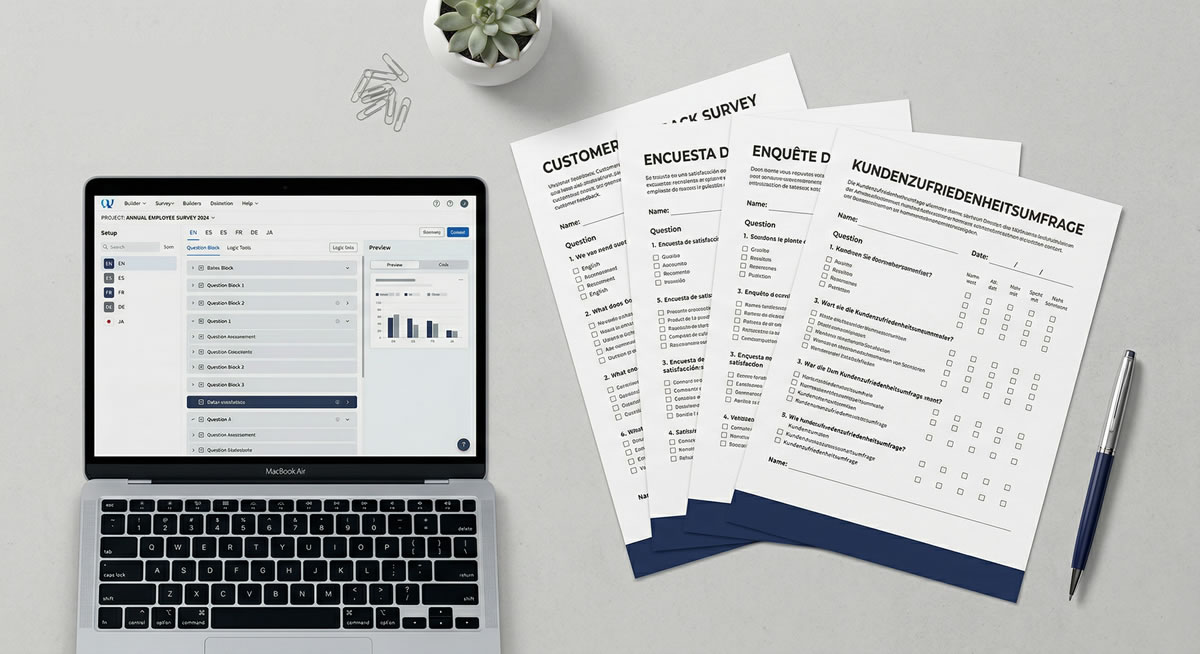
Modern survey instruments are rarely static documents. Surveys built in platforms like Qualtrics, Decipher, Confirmit, or similar tools include dynamic piping, conditional logic, skip patterns, and embedded variables. All of these must function correctly in every language version, and not all languages cooperate with the assumptions built into English-language survey scripting.
German and Finnish sentences, for example, are often significantly longer than their English equivalents. A question with dynamic text insertion that fits neatly on a single screen in English may break the layout in translation. Some languages require grammatical changes to piped variables depending on case, gender, or number. A name piped into a sentence in English behaves differently when the surrounding sentence structure in the target language requires agreement.
Translation providers working in the market research sector need to understand these mechanics. They need to be able to work directly with exported files from the relevant survey platforms, handle piping tags without corrupting the underlying logic, and validate that the live programmed survey behaves correctly in each language before the survey goes into the field.
TTG works across the survey platforms used by major research firms, handling Excel-formatted scripts as well as platform-specific export files, and provides post-programming QA as a discrete service: reviewing the live survey in each language after programming to confirm that layout integrity is maintained, piping functions correctly, and no content has been lost or distorted during the build process. For one US-based data collection and fieldwork company, this post-programming QA step became a permanent part of the workflow because it caught errors that occurred not in translation but during the programming phase itself, errors that would have compromised the data and required re-fielding.
Back-translation (translating a document back into the source language to check accuracy) is required by some clients and regarded as unnecessary theater by others. The truth is more specific than either position suggests.
Back-translation is most valuable for clinical or regulatory research, where sentence-level precision is a compliance requirement. For commercial market research, a more useful quality-control approach is independent review by a second native-speaking linguist with subject-matter expertise, who assesses the translation against the research objectives rather than the source text word by word. This catches the substantive problems (a question that will mislead respondents, a concept that doesn’t translate cleanly) rather than surface-level differences in phrasing that back-translation tends to flag unnecessarily.
The right QA approach depends on the study. The right translation partner can advise on the best approach for each project.
Where the Real Insights Live and Where They Are Most Easily Lost
Open-ended questions are the richest data in most research studies and the hardest to handle across languages.
Verbatim responses are where respondents say what they actually think, in their own words, without the constraint of predefined answer options.
That freedom produces insight. It also produces slang, abbreviations, regional idioms, half-finished sentences, cultural references, and responses that cannot be processed by anyone who does not understand both the language and the research context.
The term “verbatim translation” is slightly misleading. A literal word-for-word rendering of an open-ended response frequently produces something unreadable in English, because the respondent was not writing in structured prose. They were answering a question in the way people answer questions: casually, sometimes imprecisely, with shortcuts that make sense to a native speaker and look like noise to anyone else.
Verbatim translation in a research context means capturing the meaning, tone, and intent of what the respondent said, in natural English, in a way that supports accurate coding and analysis. This is an interpretive skill, not a mechanical one. It requires the translator to understand what the question was asking, what the respondent was trying to say, and how to render that in English without flattening or distorting it.
For B2C studies, open-ended responses often include colloquial language, emoji-style shorthand in digital surveys, brand nicknames, and off-topic responses as respondents click through for their incentive. For B2B and professional studies, responses may contain industry-specific terminology, acronyms, and technical detail that require subject-matter familiarity to translate accurately.
A verbatim translation that simply converts words from one language to another is incomplete.
The translator reviewing responses in language has access to context that the English-reading analyst does not: whether a respondent’s phrasing carries irony, whether a term has a specific regional or subcultural meaning, whether a reference is to a local event or figure that needs explanation to be interpretable.
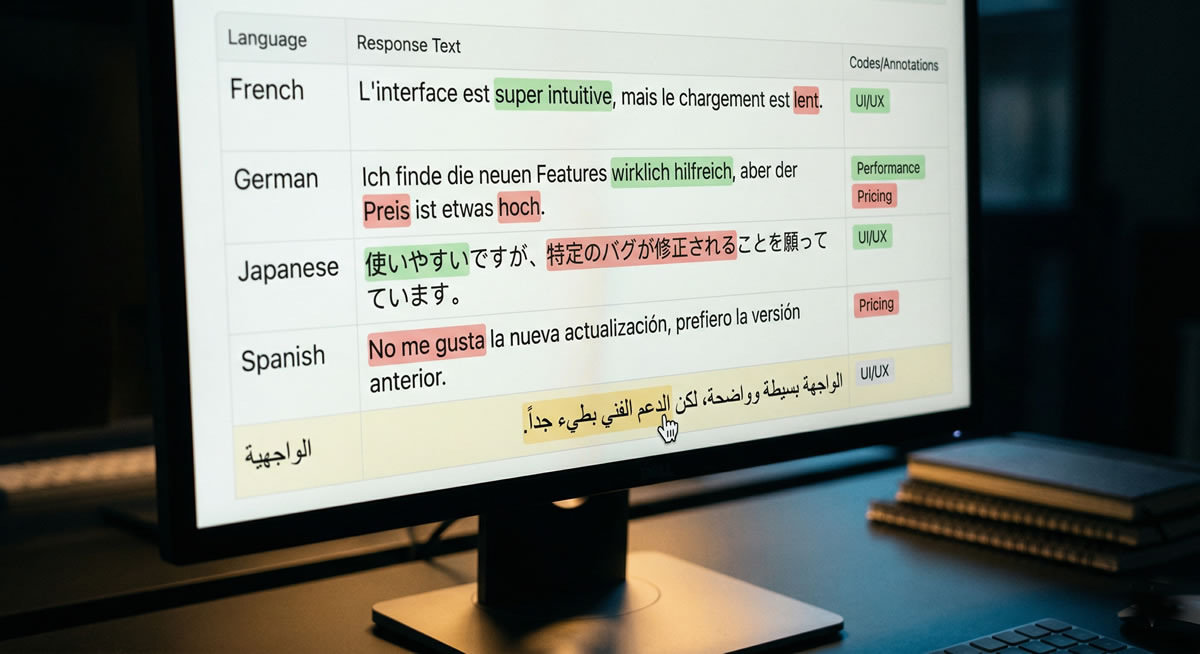
High-quality verbatim translation includes annotation: notes that flag cultural references, explain local terminology, identify invalid or off-topic responses, and alert the analyst to anything in the original that would be lost in translation without comment.
This is what separates a research-aware language provider from a generic translation service.
Large-scale quantitative studies can generate hundreds of thousands of open-end responses across multiple languages. At that volume, the question of whether to translate into English before coding, or code in-language and translate the code frame, becomes operationally significant.
AI-assisted workflows have made both approaches more feasible at scale, but they still require human oversight at the level of individual responses to catch errors that automated systems produce consistently enough to skew analysis.
The right approach depends on the research objectives, the size of the dataset, the number of languages involved, and the timeline. A language partner with genuine market research experience can advise on workflow design before the project goes into the field, rather than leaving the research team to solve a logistics problem after the data is already collected.

The Layer Beneath the Words
Language and culture are inseparable, and market research instruments that treat them as separable produce data that reflect the instrument rather than the market.
Some topics require structural adaptation, not just linguistic translation, to function correctly in specific markets.
Research covering religion, politics, sexuality, household finances, or personal health yields different data across cultural contexts, not because respondents have different views, but because the willingness to disclose, the interpretation of what is being asked, and the framing required to make a question feel appropriate all vary significantly.
In parts of Germany, historically conditioned wariness toward intrusive or surveillance-like questioning affects how direct attitudinal questions land, and researchers working in those markets have long known to use indirect framings that would be unnecessarily roundabout in other contexts. In France, questions about religion or sexuality are typically considered private, which affects both willingness to respond and the candor of responses, and question wording needs to reflect this norm to produce usable data. These are not edge cases. They are standard considerations for any firm running multi-market studies in Europe.
Cultural adaptation means identifying these requirements before translation begins, which requires market-specific expertise on the translation team, not just linguistic competence.
“Spanish” is not a single target for survey translation. Neither is “Arabic,” “French,” “Portuguese,” or “Chinese.”
Regional variation within a single language can affect comprehension, register, and the cultural salience of specific terms to a degree that meaningfully affects data quality.
A survey translated into Castilian Spanish and fielded with respondents in Mexico, Colombia, and Argentina will produce measurement variation that the research design did not intend to introduce. The correct approach for multi-country studies within a language region is to adapt to each target market, use translators with in-country expertise, and flag terminology decisions that affect comparability across regional versions.
This is particularly important for brand tracking studies, where the goal is to measure the same perceptions consistently over time and across markets. A tracker that introduces regional language variation across waves is measuring something other than what the research brief specifies.
Some constructs central to an English-language instrument do not have direct equivalents in other languages or cultures.
Words like “empowerment,” “mindfulness,” or “work-life balance” either lack clear translations or carry different connotations across markets. In some cases, the concept itself is culturally bounded: a question about attitudes toward individual achievement maps differently onto collectivist versus individualist cultural frameworks, and no amount of careful translation fixes a conceptual mismatch.
Identifying these issues before fieldwork, flagging them to the research team, and working collaboratively on adapted approaches that preserve the research objective is the job of a language partner who understands research methodology, not just language.
USP Marketing Consultancy, a global research firm specialising in the construction, installation, and home improvement sectors, works with TTG specifically because the terminology in those industries requires translators who understand how technical language varies by regional market and trade context, not just how words translate across languages.
That kind of specialist alignment directly affects the quality of the data those studies produce.
Focus Groups, In-Depth Interviews, and the Full Fieldwork Chain
Quantitative survey translation and qualitative research language support are different disciplines. They involve different skills, different workflows, and different quality standards.
A provider who does one well does not automatically do the other.
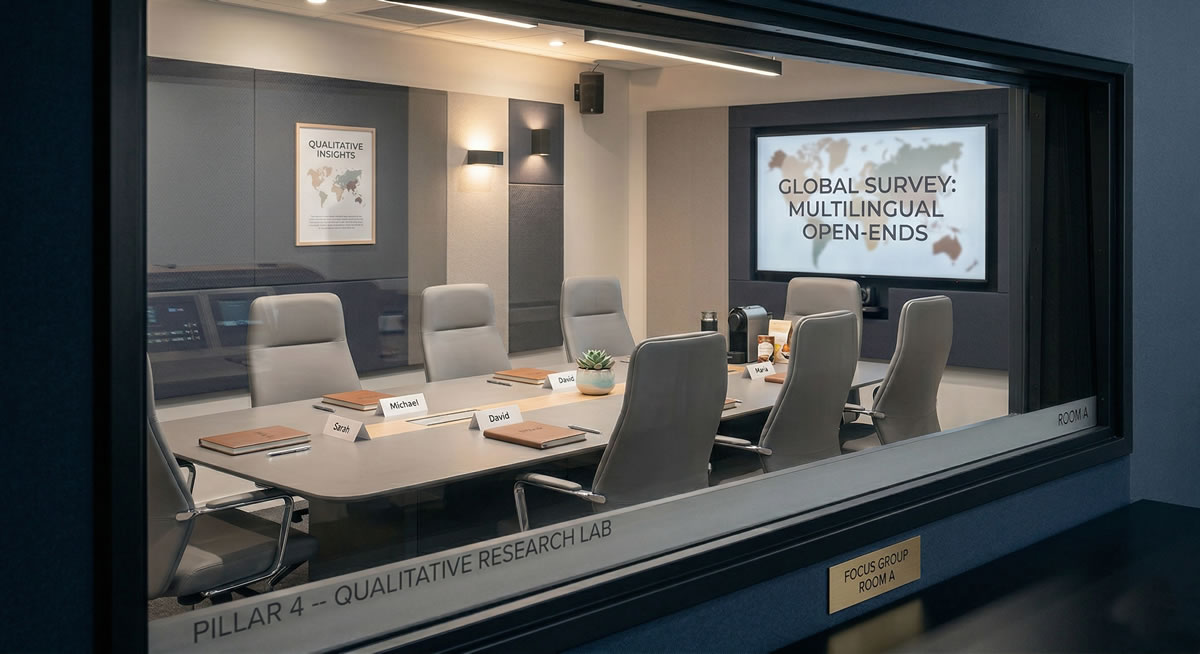
Translating a discussion guide is not the same as moderating a focus group in another language, and the two services are not interchangeable.
A translated discussion guide prepared by a skilled linguist with qualitative research experience will accurately convey the intent and probing logic of the original in the target language.
Bilingual moderation requires a different person: someone who can conduct a live research session, probe naturally without leading, manage group dynamics, and maintain the research objectives in real time, all while operating fluently in the target language.
The best qualitative projects in non-English markets use both. The discussion guide is translated and reviewed for cultural and conceptual appropriateness before the session. The moderator is a qualified researcher with native-level fluency in the target language, not simply a bilingual speaker who can facilitate conversation. These are different hiring criteria, and they produce different research quality.
For remote and online qualitative work, simultaneous interpretation allows English-speaking clients to follow sessions in real time, while participants engage in their native language. Consecutive interpretation is more common in in-person IDIs and some focus group contexts where real-time rendering is less critical than accuracy.
Qualitative research transcripts are analytical tools, not administrative records. A transcript from a focus group or IDI that simply captures what was said without indicating who said it, when the tone shifted, where the group laughed or fell silent, or where a respondent was being ironic is a less useful research document than one that captures those dimensions.
Transcription services built for qualitative research include speaker identification, emotional notation, and formatting that aligns with the research team’s analysis workflow.
Multilingual transcription for international studies requires that the transcriptionist understand not just the language but also the research context: what the session was trying to explore, what the key themes were, and where unexpected material surfaced that deserves attention.
Qualitative research projects involve language at every stage: recruiting materials need to be localized for each market, stimulus materials (concepts, pack shots, advertising materials shown to respondents) need to be adapted rather than just translated, session recordings need to be transcribed and translated for analysis, and final reports summarising findings across multiple markets need to render consistent conclusions from data collected in different languages.
A language partner that can support the full chain, rather than handling discrete pieces in isolation, reduces the handoff errors and consistency problems that accumulate when different vendors handle different stages of the same project.
What to Evaluate Before You Sign
The vendor selection criteria that research firms apply to LSPs reflect hard-won operational experience. The questions that come up in every serious evaluation cover five areas.
Market research data is proprietary by definition. Survey instruments contain intellectual property. Verbatim responses contain personal data. Research findings, before they are published, represent significant commercial value to the clients commissioning them.
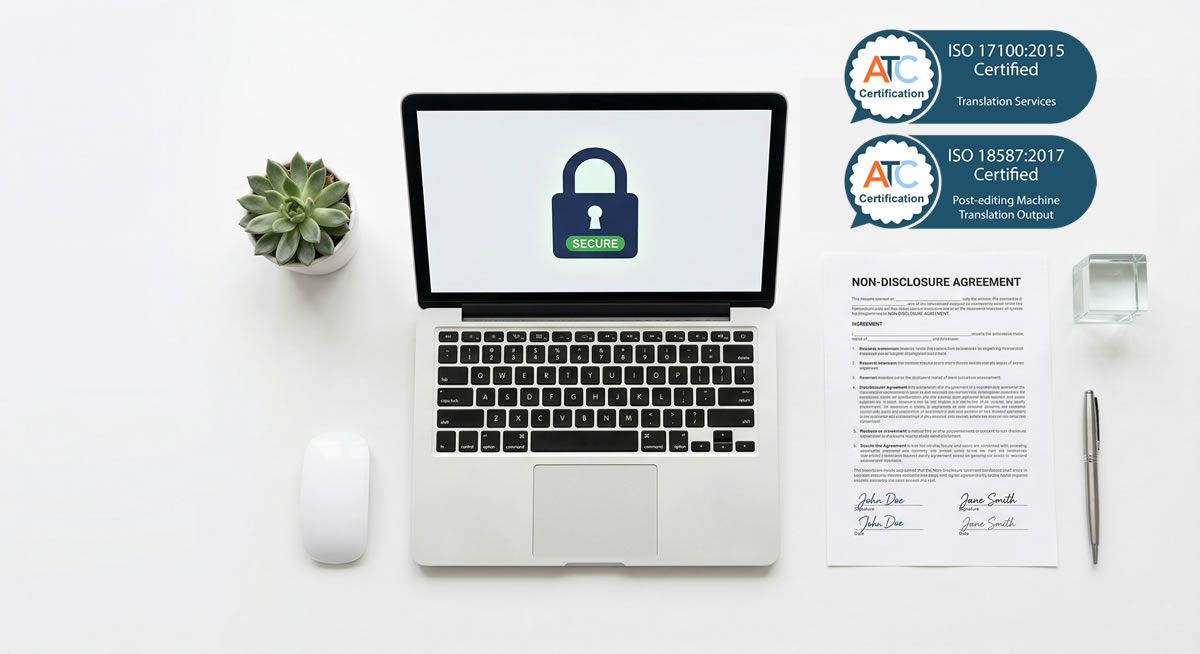
A credible language services partner has documented policies governing data handling at every stage: secure transfer protocols, access controls that limit who sees which materials, NDA coverage for all linguists working on a project, and clear retention and deletion schedules for project files after delivery.
ISO 27001 certification (information security management) is the relevant credential to look for. In markets where data protection regulations apply, GDPR compliance for European projects, for example, the language provider’s data practices need to align with the research firm’s own compliance obligations, not just the provider’s standard commercial terms.
TTG holds ISO 17100 certification (translation quality management) and ISO 18587 certification (machine translation post-editing quality) and is FSQS registered, providing the supplier assurance framework used by financial services and other sectors with strict vendor governance requirements. Project-specific NDAs are standard, and file-handling procedures are designed to meet the confidentiality expectations of research clients.
There is a meaningful operational difference between a project manager who handles translation jobs and one who understands market research. The former needs to be told what piping is. The latter already knows why it matters, what can go wrong, and how to flag issues before they affect the data.
For OnePoll, the UK-based research agency within the SWNS Media Group’s 72Point operation, the working relationship with TTG is structured around research managers and sales representatives working directly with TTG’s team on individual project requirements. The reason that structure works is that TTG’s team understands the research workflow well enough to anticipate requirements, not just respond to them. In a business where surveys need to launch simultaneously across multiple countries, and a delay in one language version can delay an entire PR campaign, operational fluency is not optional.
International research projects rarely involve one language. The operational challenge is coordinating multiple language versions for a single launch date across different time zones while maintaining consistent quality across all versions.
Translation memory is the primary tool that makes this manageable at scale. By storing approved translations of recurring elements (scale labels, standard instructions, brand names, terminology specific to a client’s research programme), translation memory accelerates delivery on subsequent projects, reduces costs on repeated content, and ensures that the same terms are rendered consistently across studies. For firms running tracker programmes across multiple waves, terminology consistency is not just an efficiency matter: it directly affects the comparability of data across time.
ISO 17100 is the international standard for translation quality management. It specifies requirements for the translation workflow, including the qualifications of translators, the editing and proofreading process, and the project management procedures that govern a translation project from brief to delivery. An LSP holding ISO 17100 certification has had its processes independently verified against that standard.
ISO 18587 covers the post-editing of machine translation output by human linguists. As AI-assisted translation workflows become standard in high-volume market research (particularly for verbatim translation and open-ended coding at scale), ISO 18587 certification is the relevant quality-assurance credential for the human-oversight component of those workflows.
Asking to see ISO certificates and verifying their current validity is a basic due diligence step that distinguishes serious vendors from those who claim certifications they do not hold.
The practical difference between a translation vendor and a translation partner becomes visible when something goes wrong. A vendor delivers what was ordered and flags problems afterward. A partner flags problems before they affect the research, suggests alternatives when the brief creates language or cultural issues, and treats the success of the study as a shared objective rather than a contract obligation.
For market research firms, the partner model matters more than in most other industries because the cost of a language failure is not just a bad translation. It is compromised data, re-fielding costs, delayed client deliverables, and, in some cases, findings that cannot be published because the cross-market comparability that was the whole point of the study cannot be established.
TTG and Market Research: How We Work
Transatlantic Translations Group has supported market research firms, data collection companies, and global insights agencies since 2001. With offices in the United States, Scotland, England, and Canada, TTG operates across the time zones and markets where international research runs.
Our market research language services span the full project lifecycle:
Survey translation and localisation across all major survey platforms, including Excel-format scripts and platform-specific export files with piping, conditional logic, and dynamic variable handling. Post-programming QA on live surveys is available as a standard service, verifying layout integrity and functional accuracy in every language before a survey goes into the field.
Verbatim and open-end translation handled by linguists with subject-matter expertise in the relevant research vertical, with annotation and flagging of cultural references, invalid responses, and terminology requiring analyst attention. AI-assisted workflows for high-volume verbatim translation, post-edited by professional linguists to the standard specified by ISO 18587.
Cultural adaptation and localisation for multi-market programmes, with market-specific translator assignment rather than generic language team deployment. Proactive identification of concept translatability issues, sensitive topic navigation requirements, and dialect and regional variation considerations before translation begins.
Qualitative research support, including discussion guide translation, transcription with speaker identification and contextual notation, and translation of analysis deliverables and reporting.
Operational standards include ISO 17100 and ISO 18587 certification, FSQS registration, project-specific NDAs, and secure file handling throughout the project lifecycle.
TTG works with OnePoll, part of the SWNS Media Group, on concurrent multi-country survey launches requiring precise piping management and culturally adapted translations under tight deadlines. We support USP Marketing Consultancy with sector-specific translation for research in the construction, installation, and home improvement industries across international markets. Our work with US-based data collection firms includes post-programming QA as a permanent part of the quality workflow.
For research directors and fieldwork operations teams evaluating a language services partner for international studies, we are available for a discovery conversation with no obligation.
What is verbatim translation in market research?
Verbatim translation in market research means rendering open-ended survey responses so that the meaning, tone, and intent of what the respondent said is accurately conveyed in the target language, not producing a word-for-word literal rendering.
Open-ended responses are typically written in casual, informal language. Literal translation of that kind of text frequently produces output that is difficult to code or analyze, because what mattered was what the respondent meant, not the exact words used.
High-quality verbatim translation includes annotation: notes that flag cultural references, explain local slang, identify invalid or off-topic responses, and alert the analyst to anything in the original that would be lost in translation without comment. That is what separates a research-aware language provider from a generic translation service.
How do you maintain data validity when translating surveys across languages?
Data validity in multilingual surveys depends on measurement equivalence: the translated instrument must measure the same construct as the original, not just use the same words.
Achieving this requires translators with direct experience in market research methodology. People who can identify and resolve functional mismatches between source and translated instruments, not just convert text between languages.
It also requires culturally appropriate adaptation of scale labels, question stems, and response options, as well as validation of the live-programmed survey in each language before fieldwork begins. A translation that is linguistically accurate but functionally inequivalent produces cross-market data that cannot be reliably compared, which is often the entire point of the study.
What is the difference between survey translation and survey localisation?
Survey translation converts the source text into the target language. Survey localization is a broader process that adapts the instrument to the target market, and for most international research applications, localization is the appropriate standard rather than translation alone.
Localization includes cultural and contextual adjustments to question framing, scale labels, and navigation of sensitive topics, as well as considerations of dialect and regional variation, and the technical handling of platform-specific elements such as piping and skip logic.
The distinction matters because a survey that is accurately translated but not localized can still produce measurement problems: questions that carry different weight across markets, scale labels that function differently across cultures, and platform logic that breaks when sentence lengths expand in translation.
How should market research firms handle open-ended responses in multiple languages?
The two primary approaches are translating responses into English before coding, and coding responses in the language using a translated code frame. Which approach is more appropriate depends on the volume of responses, the number of languages involved, the timeline, and whether the research objectives require cross-market comparison at the individual response level or only at the aggregate level.
Both approaches benefit from human oversight at the response level. AI-assisted workflows have made high-volume open-end processing more feasible, but automated systems produce errors consistently enough to skew analysis if left unreviewed.
A language partner with genuine market research experience can advise on workflow design before data collection begins, which is significantly more efficient than resolving the question after thousands of responses have already been collected.
What should market research firms look for in a translation partner?
The most important criteria are subject-matter expertise in market research methodology, ISO 17100 certification for translation quality management, experience with the survey platforms and file formats used in the research workflow, demonstrable capability in verbatim and open-end translation, documented data confidentiality and security practices, and dedicated account management with genuine research fluency.
Certification matters because it provides independent verification of a provider’s quality processes, not just their self-reported claims. ISO 17100 covers translation quality management; ISO 18587 is the relevant certification for AI-assisted translation workflows with human post-editing, which is increasingly the standard for high-volume market research applications.
The ability to support the full project lifecycle, from pre-fielding instrument preparation through to post-fielding verbatim delivery and reporting, is a significant operational advantage over providers that handle discrete pieces in isolation.
Can AI translate market research surveys accurately?
AI translation can handle high-volume market research tasks such as verbatim translation and open-end coding at scale, but it requires professional human post-editing to meet the quality standards international research demands. AI translation without human oversight is not appropriate for survey instruments, where measurement equivalence, cultural adaptation, and piping functionality require judgment that current AI systems do not reliably provide.
The appropriate model for most market research applications is AI-assisted translation post-edited by linguists with market research expertise, delivering the speed and cost benefits of AI while maintaining the accuracy the research requires.
ISO 18587 is the international certification covering the post-editing of machine translation output by human linguists. It is the quality credential to look for in any provider offering AI-assisted translation workflows.
What is post-programming QA and why does it matter for international surveys?
Post-programming QA is a review of the live programmed survey in each language, conducted after the survey has been built in the survey platform, and it catches a category of errors that standard translation QA cannot: mistakes introduced during the programming process itself, after translation has been delivered.
The review verifies that language displays correctly, piping functions as intended, no content was lost or distorted during programming, and layout integrity is maintained across all language versions.
For research firms running multi-country studies, post-programming QA is a cost-effective step that prevents significantly more expensive problems. A data-collection error caught before fielding costs a fraction of what it costs to refield an entire study.
Transatlantic Translations LLC
80 Theodore Fremd Avenue
Rye, NY 10580
Telephone: +1 (844) 329-7088
Email: [email protected]
Transatlantic Translations Ltd.
Third Floor
3 Hill Street
New Town
Edinburgh EH2 3JP
Telephone: +44 (0) 131 3416188
Email: [email protected]

Transatlantic Translations Ltd.
1 Acorn Business Park
Northarbour Road Portsmouth
Hampshire PO6 3TH
Telephone: +44 (0) 203 906 8354
Email: [email protected]
Transatlantic Translations
201-1405 Henri Bourassa O
POB 677
Montreal, QC H3M 3B2
Telephone: +1 (844) 329-7088
Email: [email protected]


