Eliminate Language Barriers.
Law firms require precision translation and interpreting to meet the needs of non-English speaking clients.

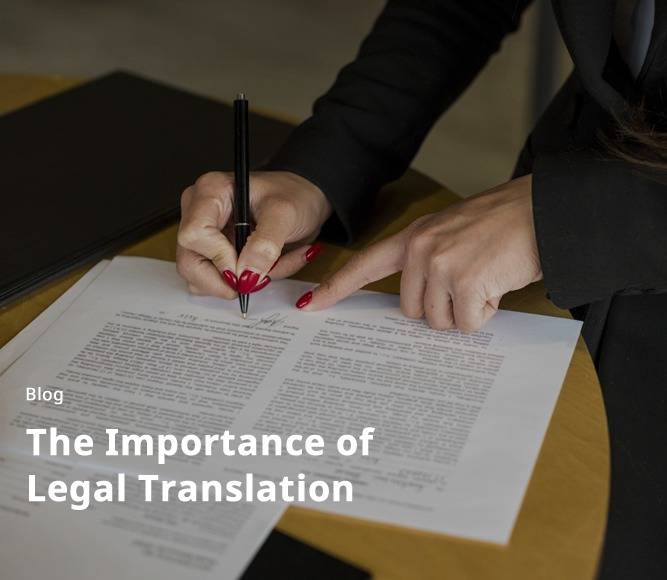
Legal document translation involves translating legal documents from one language to another. Legal documents that require translation include contracts, agreements, patents, court transcripts, and regulatory documents.
Working with professional translators with expertise in law is essential.
Legal document translation is a delicate process that requires the utmost accuracy and attention to detail to ensure that legal agreements are properly communicated between parties speaking different languages.

A professional translator must produce a high-quality translation of the original document to certify a translation. The translator must then swear to the accuracy and completeness of the translation before a notary public.
Certified translations are necessary for a variety of legal situations.
The translated document must then be accepted by government agencies, courts, and other official bodies as legally binding and authentic. Certified translations provide an official record of legal documents in foreign languages.

During legal proceedings, legal interpretation conveys spoken words, concepts, and legal terminology accurately and impartially from one language to another.
Legal interpreting is essential in ensuring that non-native speakers, who may need help understanding the language or legal system of the country they are in, can effectively communicate their point of view to other parties.
Legal interpreters are vital in ensuring communication during legal proceedings, such as court hearings, depositions, and client meetings, is smooth and effective.
These interpreters must deeply understand legal terminology in both languages and the associated legal systems of the languages.

Law firms communicate with clients from all over the world. To tap into diverse markets, they must ensure communication, including websites and marketing materials, is translated to reach international audiences.
The goal is to ensure that the translated content accurately and effectively communicates the intent and message of the original material.
Professional human translators with expertise in marketing and website localization help legal firms to translate their content accurately and effectively in a way that resonates with the target audience. That ensures that the translated content is culturally appropriate and captures the relevant nuances and references to the audience.